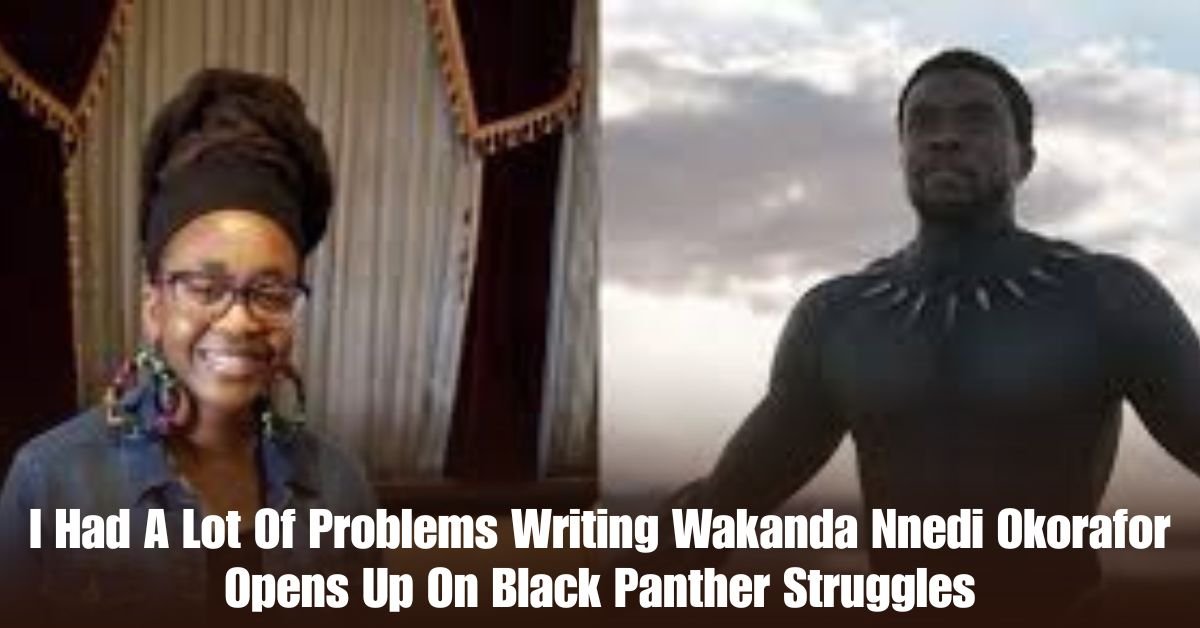
The fictional nation of Wakanda is often hailed as a beacon of Afrofuturism, but for Hugo and Nebula award-winning author Nnedi Okorafor, it was a source of “deep, searing” creative conflict While the world celebrated the 2018 cinematic explosion of the Black Panther, the Nigerian-American writer was grappling with the moral and historical implications of a hidden African superpower In a candid retrospective, Okorafor revealed why she initially hesitated to join the Marvel family and the specific struggles she faced while penning which is the the Black Panther: Long Live the King and Shuri comic series.
Why Wakanda Didn’t Sit Right
Nnedi Okorafor is known for her Africanfuturism a term she coined to describe science fiction that is foundationally rooted in African culture, history, and perspective When Marvel approached her, the core concept of Wakanda presented which is the several “problematic” hurdles
- The Silence of a Superpower: Okorafor questioned how a technologically advanced African nation could remain hidden and silent during the continent’s darkest which is the eras, specifically colonialism and the transatlantic slave trade.
- Isolationism vs Pan Africanism: She noted a troubling narrative choice where Wakanda appeared more engaged with the United States than with its neighboring which is the African nations.
The Monarchy Issue
Coming from an Igbo background, which historically values decentralized, democratic governance, Okorafor admitted she gave “the side-eye of disapproval” to the idea of an absolute monarchy The flaw wasn’t Wakanda The flaw was in the writing I felt maybe that was the reason to fix some of these things from the inside,” Okorafor explained which is the regarding her decision to eventually accept the role.
Fixing It from the Inside
Rather than rejecting the lore, Okorafor used her position as a writer to “humanize” the untouchable royalty of T’Challa. She focused on bringing the king which is the closer to the everyday people of Wakanda.
Grounded Leadership
In one powerful scene in Long Live the King, she depicted T’Challa walking barefoot through a local community, rejecting the image of a distant, “macho” which is the sovereign.
Focus on the People
She criticized the focus on “people higher up,” instead choosing to which is the explore the lives of the common citizens and the Dora Milaje.
Africanfuturist Tech
She replaced generic sci-fi tropes with technology that felt “normalized” in African settings, drawing from her observations of how cell phones were integrated which is the into remote Nigerian villages
The Legacy of the Struggle
Despite her reservations, Okorafor’s run on Black Panther and Shuri is credited with adding a layer of authenticity and “humility” to the characters She proved that even within the rigid boundaries of a global franchise like Marvel, a writer which is the can “push the boundaries” and force a direct conversation with the past.
Disclaimer
The news information presented here is based on available reports and reliable sources Readers should crosscheck updates from official news outlets