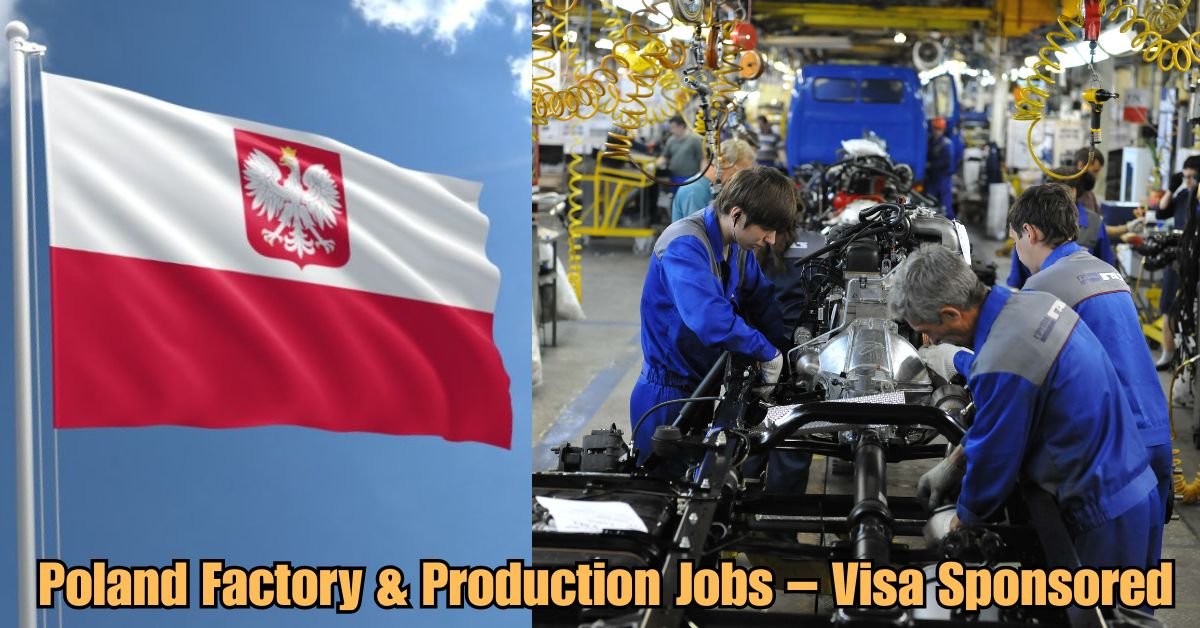
Poland Factory & Production Jobs 2025: A Complete Guide to Visa Sponsorship
Are you looking for a stable career with a good salary in Europe, where the path to legal residency is also easy? Poland has emerged as an excellent destination for those seeking visa sponsorship for factory and production jobs.
As of January 2025, Poland’s manufacturing sector is facing a major labor shortage, leading hundreds of companies to hire people from outside the EU. In this guide, we will explain the salaries, types of visas, and the complete method to apply to top companies.
Why is Poland the Best for Factory Workers in 2025?
Poland’s economy is currently the powerhouse of Central Europe. Due to local citizens shifting to Western Europe, there are many vacancies for workers in the industrial sector.
- Higher Minimum Wage: From January 1, 2025, the monthly minimum wage in Poland has increased to PLN 4,666 gross (approximately €1,100).
- Affordable Living: Compared to Germany or France, expenses in Poland are lower, and many companies provide accommodation (housing) themselves.
- Path to EU Residency: After working on a D-Type National Visa, you can apply for a Karta Pobytu (Temporary Residence Card), which eventually becomes a means for Permanent Residency.
1. High-Demand Factory Jobs in Poland
Polish factories have various production lines. Often, a big degree is not required for these jobs; physical health and a passion for learning are sufficient.
General Production and Assembly
- Production Worker (Pracownik produkcji): The most common job. It involves assembling items, monitoring machines, and quality checks.
- Line Assembler: Common in the automotive (vehicles) and electronics sectors.
- Food Packager: High demand in dairy, meat, and chocolate plants.
Specialized Technical Roles
- CNC Operator: High-paying jobs for those with technical skills.
- Welder (MIG/MAG/TIG): The most sought-after skill in Poland’s heavy industry.
- Forklift Operator: This requires a Polish UDT license (which the company often sponsors itself).
2. Visa Sponsorship and Legal Requirements
To work legally, you cannot simply go on a tourist visa. You need a “legalized job offer.”
The Sponsorship Process
- Work Permit (Type A): Your employer applies for this at the local Voivodeship Office (Urząd Wojewódzki). This permit is only for that specific employer.
- Labor Market Test: The employer must prove that they could not find a local worker (although many factory jobs are now exempt from this test).
- D-Type National Visa: Once the work permit is received, you apply for the visa at the Polish Embassy in your home country.
Essential Legal Terms
- Umowa o pracę: Standard Employment Contract (provides the highest legal protection).
- Umowa zlecenie: Mandate Contract (often for seasonal or temporary work).
- PESEL: National ID number required for taxes and healthcare.
- ZUS: Social insurance (which provides you with the facility of free government medical treatment).
Also Read: Southeast Asia Work Visa Options For 2025
3. Salary and Benefits: What Will You Get in 2025?
Factory jobs in Poland are not just about the hourly rate; the entire “package” is important.
- Hourly Rate: At least PLN 30.50 gross.
- Overtime (Nadgodziny): Working on weekends often pays 50% to 100% extra.
- Accommodation (Bezpłatne zakwaterowanie): Many companies provide free or cheap housing near the factory.
- Bonuses: A monthly attendance bonus can add PLN 300–600 to your pay.
- 4. How to Find Sponsored Jobs (Direct Apply)
Avoid “fake agents” asking for thousands of dollars. Apply using these verified methods:
- Polish Job Portals: Use “Foreigners welcome” or “Visa sponsorship” filters on Pracuj.pl, OLX.pl, and Indeed Poland.
- Target Large Companies: Companies like Arla Foods, Amazon Poland, LG Energy Solution, and Samsung have large recruitment departments that bring people from abroad.
- EURES Portal: This is the official portal of the European Union where verified jobs are listed.
- LinkedIn: Follow major Polish agencies like OTTO Work Force or Gi Group.
(FAQs): Poland Factory & Production Jobs – Visa Sponsored
-
Is IELTS necessary for a Poland factory job?
Most factory jobs do not require an English test. Basic English or a passion for learning a little Polish is enough.
-
How long does the visa process take?
Approximately 2 to 4 months. It takes 30–60 days for the work permit and 2–4 weeks for visa processing.
-
Can I take my family with me?
Once you have worked for 1–2 years and have received your Residence Card (TRC), you can apply for a family visa.
Conclusion: Take the First Step Today
Poland provides a safe environment and a legal path for hardworking people. By applying directly, you can avoid scammers and secure a good job.
Disclaimer: This information is for awareness and educational purposes only. Always verify details from the official employer or government website (gov.pl) before applying.